Maliatrack is a GPS tracking, fleet management, and route optimization software used to monitor vehicles and mobile assets, improve dispatching, reduce fuel waste, enhance driver safety, and deliver better service across industries like logistics, FMCG, construction, public sector, utilities, healthcare, field service, and more.
If you are searching for a “vehicle tracking system,” “fleet management software,” “route optimization,” or “dispatch software,” you usually want three things working together:
live and historical GPS tracking you can trust,
fleet management tools that turn data into actions (alerts, maintenance, driver behavior, reports),
route optimization that plans efficient multi-stop routes with real constraints (time windows, capacities, priorities).
This guide explains what these systems do, the features that matter, how route optimization works, and how different industries use the same core tools in different ways.
What GPS tracking software does
GPS tracking software shows where a vehicle or asset is now, where it has been, and what it was doing during each trip. It typically provides:
Real-time location and status
Trip history with stops and durations
Alerts for specific events (for example, speeding or ignition after hours)
Proof of presence at customer sites (arrival and departure records)
GPS tracking is the visibility layer. It answers: “Where is it?” and “What happened?”

What fleet management software adds on top of tracking
Fleet management software is what turns visibility into operations control. It is designed for daily decisions, not just maps.
Common fleet management outcomes include:
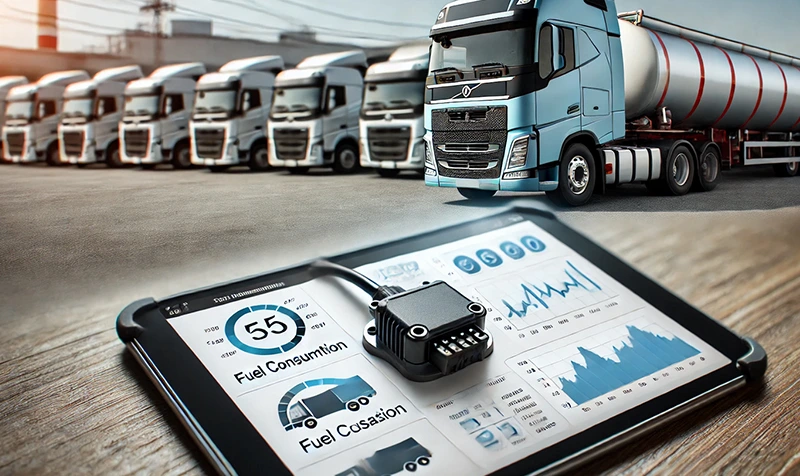
Lower fuel and operating costs through exception monitoring (idling, detours, overspeed, misuse)
Higher on-time performance using dispatch views and ETAs
Better safety through driver behavior monitoring and coaching workflows
Fewer breakdowns through preventive maintenance planning
Cleaner reporting for customer disputes, compliance, and management KPIs
In other words, GPS tracking shows movement. Fleet management explains performance.
What route optimization software does, in real operations
Route optimization software plans the most efficient set of routes for one or more vehicles serving multiple stops, while respecting constraints. In the operations research world, this is commonly modeled as a Vehicle Routing Problem (VRP), especially when you add constraints like time windows and capacities. In practice, it means your dispatch team can create routes that make sense in the real world, not just the shortest path on a map.
Route optimization is most valuable when your fleet has:
Many stops per vehicle per day
Time windows (deliver between 10:00 and 12:00)
Priorities (VIP stops first)
Vehicle limits (capacity, driver shift time)
Service times (20 minutes on site)
Rules (no-go zones, preferred roads, depot return)
The strongest results happen when route optimization is connected to GPS tracking, because you can compare planned routes vs actual execution.

One platform, many industries: how different teams use the same core tools
Logistics, 3PL, freight, and distribution
They typically need live visibility, proof of delivery visits, route discipline, and utilization reports. Geofences around depots and customer locations help automate arrival and dwell time tracking, while alerts highlight route deviations and late deliveries.
FMCG, sales fleets, and merchandising
They care about coverage, visit verification, and service time on site. GPS plus geofencing can confirm whether planned visits happened, and route optimization helps sequence stops to reduce time lost between territories.
Construction, heavy equipment, and project fleets
They often track vehicles plus assets, with a focus on theft prevention, after-hours movement, and job-site utilization. Geofences around sites and yards are critical, and maintenance planning matters because downtime is expensive.
Public sector, municipalities, and waste management
They often need route adherence, accountability, and reporting. Waste collection is a classic routing problem with constraints and fixed schedules, and GPS history helps validate service and investigate complaints.
Utilities, telecom, and field service teams
They need scheduling, fast dispatch, and response verification. Route optimization helps assign technicians efficiently, and live tracking improves ETAs and customer communication.
Healthcare, pharma logistics, and cold chain delivery
They usually require strict timing, chain-of-custody discipline, and compliance reporting. Time windows, exception alerts, and auditable reports are core requirements. Route optimization is especially useful when deliveries must happen within fixed windows.
Oil and gas, security, and high-risk operations
They focus on safety rules, restricted areas, and incident response. Alerts for speeding and route deviation matter more than “nice-to-have” dashboards.
Car rental, leasing, and service replacement vehicles
They often need asset utilization, security controls, and recovery workflows for theft or misuse. GPS tracking plus alerts and usage reports are typically the priority.
Agriculture and mobile assets
They may track vehicles and field equipment, focusing on utilization, operational coverage, and maintenance cycles. Route optimization is relevant for collection routes and service runs.
Feature-to-outcome map (what to prioritize)
The fastest way to pick the right software is to map each feature to the outcome you actually want.
| Outcome you want | Features that usually drive it |
|---|---|
| Reduce fuel waste | Idling detection, overspeed monitoring, route deviation alerts, route optimization, usage reports |
| Improve on-time delivery | Dispatch view, ETAs, time windows, route optimization, geofence-based arrival alerts |
| Reduce accidents and risk | Driver behavior monitoring (speeding, harsh events), coaching workflow, policy-based alerts |
| Reduce breakdowns | Mileage and engine-hour tracking, preventive maintenance schedules, maintenance reminders |
| Stop unauthorized use | After-hours rules, ignition alerts, geofences for restricted zones, tamper alerts |
| Better customer service | Proof of service, dwell time tracking, historical trip reports, shareable ETA workflows |
Safety note: speeding is strongly associated with higher crash risk and injury severity, so speed policy monitoring is a common safety control in fleet programs.
Operational note: idling wastes fuel and increases engine wear, so idling detection and reduction is a widely recommended fleet efficiency practice.
How to choose GPS tracking, fleet management, and route optimization software
Most buying mistakes come from choosing based on features lists instead of operational fit.
1) Validate data quality first
If trip history is unreliable, everything else becomes a debate. In a pilot, confirm:
Accurate trips and stops
Stable reporting intervals
Alerts that trigger correctly
Consistent mileage and working hours logic
2) Choose workflows, not screens
Ask, “What will dispatch do differently on day 2?”
A good platform makes daily actions simpler:
identify exceptions quickly
contact the right driver fast
document what happened
report outcomes weekly

3) Make route optimization prove itself
A route optimizer should handle your real constraints: time windows, service time, vehicle capacity, start and end depots, driver shifts. Time windows are a standard concept in serious route optimization systems.
4) Confirm scalability across departments
Fleet software is rarely “just dispatch.” It ends up used by operations, finance, customer service, and management. Role-based access and audit trails matter as usage grows, especially for regulated industries. Security frameworks like NIST CSF emphasize governance, access control, and continuous improvement.
Why Maliatrack fits multi-industry fleets
Maliatrack is built for organizations that need GPS tracking, fleet management, and route optimization in one operational stack. Teams typically start with visibility and control (tracking, alerts, reports), then expand into higher impact workflows like preventive maintenance, driver behavior coaching, and route planning with time windows and constraints.
If your operation includes deliveries, service visits, project fleets, or mobile teams, the most important requirement is not “more features.” It is a system that reliably answers daily operational questions and produces reports that hold up in customer discussions and internal reviews.
GPS tracking focuses on location and trip history. Fleet management adds operational controls like alerts, driver behavior monitoring, preventive maintenance planning, and performance reporting.
Route optimization is the process of building the best set of routes for one or more vehicles across many stops while respecting constraints like time windows, capacities, priorities, and driver shifts.
A pilot can be quick, but a full rollout depends on installation scheduling, policy setup, staff training, and reporting design. The most successful rollouts start with a representative pilot and expand after policies are tested.
Yes, often through reducing idling, detours, aggressive driving, and misuse. Idling reduction is a commonly cited fleet efficiency practice because idling wastes fuel and increases engine wear.
Yes, speeding increases crash risk and injury severity, so it is commonly tracked as part of fleet safety programs.