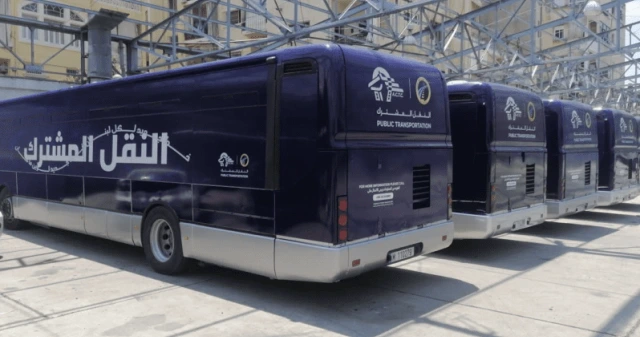

Real-time school bus
and shuttle tracking
The first requirement in educational transport is visibility.
MaliaTrack gives administrators and transport coordinators live access to:
- current bus location
- route progress
- trip history
- stop history
- departure and arrival times
- unexpected stops
- delays
- route deviations
- idle time
- utilization reports
Maliatrack’s school-bus monitoring examples explicitly describe real-time bus tracking as a core feature, while its general platform supports live monitoring of vehicles and assets with notifications for important events. This gives school transport teams the ability to answer questions immediately instead of relying on repeated calls to drivers.
For universities, the same logic applies to internal shuttles and inter-campus transport. Instead of students waiting without information, transport teams can monitor fleet movement and manage service more professionally.
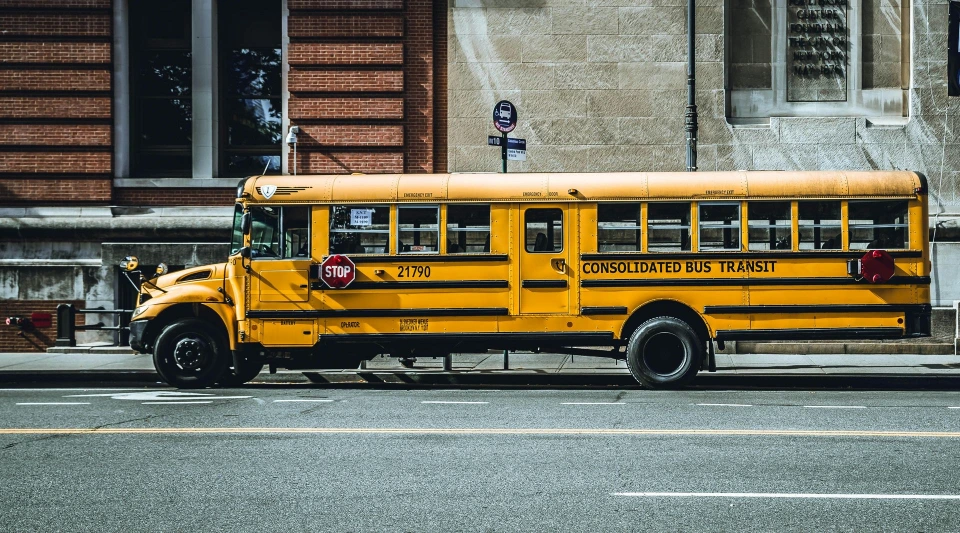
Route compliance and
geofence-based control
School transport depends on predictable routes. A bus should not be improvising its path unless there is a good reason, and if that reason exists, the administration should know.
MaliaTrack can help monitor:
- route adherence
- geofenced school locations
- geofenced pickup and drop-off points
- unauthorized route deviation
- missed checkpoints
- early or late arrivals
- service outside approved areas
Maliatrack’s route and schedule tools support checkpoints, arrival and departure times, and geofence-linked control, while its passenger-transport materials emphasize compliance with routes and schedules as a major use case.
For schools, this is especially useful when:
- multiple buses serve different areas
- routes are subcontracted
- there are dedicated pickup zones
- management wants documented evidence that routes were followed
- parent complaints need to be verified objectively
Parent notifications
and student-trip transparency
One of the strongest school-bus use cases in Maliatrack is parent communication.
Maliatrack introduced passenger-activity notifications that can inform parents or caretakers whenever a passenger enters or leaves the bus. Maliatrack partner solutions for school transport also include school administration portals plus mobile apps for parents and drivers, enabling greater transparency into the school commute.
That matters because much of the stress around school transport comes from uncertainty:
- Has the bus arrived?
- Did the child board?
- Did the child get off at school?
- Is the bus delayed?
- Is it close to home?
With the right setup, MaliaTrack can support a more transparent transport experience through:
- live bus tracking
- parent-facing updates where applicable
- boarding and drop-off event logic
- geofence-triggered notifications
- easier communication between school administration and families
For universities, the same principle can be adapted to shuttle transparency for students or staff moving between campuses and dormitories.
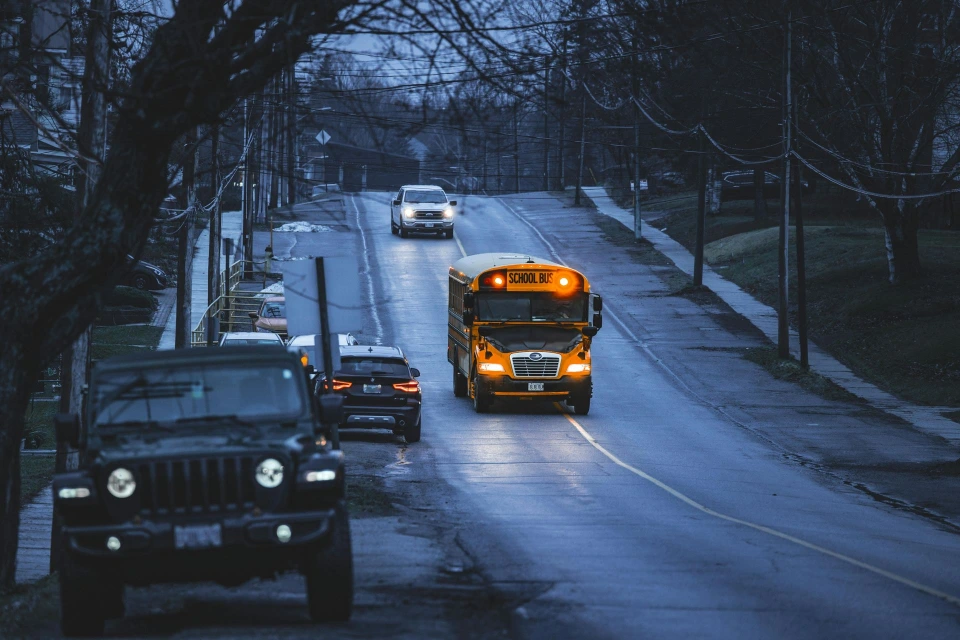
Safety alerts if a
student is left behind
Few transport concerns are more sensitive than the possibility of a child being left on a bus after the route ends.
Maliatrack specifically introduced a Passenger alert notification intended for school employees or drivers that triggers when a passenger is left in the bus. Maliatrack’s school transport materials also reference reminder features that activate after ignition is turned off, prompting the driver to check whether any students remain inside.
This is a major safety use case because it helps institutions build an additional verification layer into the end of each trip. For schools, that can support:
- safer route completion procedures
- reduced risk of missed passengers
- stronger accountability for bus staff
- better peace of mind for parents and administration
Even if the school already has internal procedures, telematics-based alerts add another layer of operational discipline.
Driver behavior
monitoring for safer student transport
School and university transport is only as safe as the driving behind it.
MaliaTrack can help monitor:
- speeding
- harsh acceleration
- harsh braking
- sharp turns
- excessive idling
- route deviation
- after-hours bus movement
- unauthorized use of vehicles
Maliatrack’s school-bus tracking materials specifically mention instant alarms for overspeeding and other violations, while its broader platform includes driver behavior monitoring as standard functionality. Its passenger-transport guidance also frames route and speed compliance as central goals.
For educational institutions, that means transport supervisors can identify risky patterns early and address them through coaching, policy enforcement, or contractor review. This is especially valuable when:
- buses operate in urban traffic
- routes include highways or steep roads
- the institution relies on third-party transport providers
- management wants a clear safety record for internal review
Schedule enforcement
and punctuality improvement
Punctuality matters in student transport. A late bus does not only delay one trip. It affects attendance, class start times, parent confidence, and the entire morning routine.
Maliatrack’s passenger-transport guidance highlights schedule enforcement as a core telematics use case, and Maliatrack’s route/schedule tools allow checkpoints with defined arrival and departure expectations.
With MaliaTrack, schools and universities can monitor:
- on-time departure from depot
- on-time arrival to school or campus
- route-by-route punctuality
- delays at specific checkpoints
- recurring schedule bottlenecks
- trip duration compared to plan
This gives the administration better evidence when reviewing:
- whether routes need redesign
- whether buses are under- or over-assigned
- whether pickup windows are realistic
- whether drivers or contractors are complying with service expectations
For universities operating campus shuttles, this helps improve transport consistency and student satisfaction.
Passenger counting
and boarding control
Some educational transport operations need more than route visibility. They also need visibility into who boarded and who got off.
Maliatrack’s school-transport materials reference passenger counting systems and boarding / alighting logic through ID-card swipes and passenger notifications. Its school-bus ecosystem examples include administration tools, parent-facing mobile apps, and driver-facing mobile applications.
For schools, this can support:
- boarding verification
- drop-off confirmation
- capacity awareness
- route planning accuracy
- attendance-linked transport oversight
- better response when a child is unexpectedly absent from a route
For universities, passenger counting can also be useful for shuttle demand planning, especially on multi-campus or dormitory routes.
Video telematics and
on-board visibility
Sometimes GPS and reports are not enough. Institutions may need visual proof during incidents, complaints, or investigations.
Maliatrack’s school-transport references mention mobile DVR video surveillance as part of the solution, enabling live awareness of what is happening on the bus. Maliatrack’s platform also supports video telematics as a key capability.
For schools and universities, this can support:
- incident review
- complaint investigation
- behavior monitoring on board
- driver accountability
- stronger safety processes for students and staff
This is especially useful on longer routes, routes with younger children, or contracted services where institutions want more operational transparency.
Better transport
management for contracted fleets
Not every school owns its buses. Many institutions outsource transportation to third-party providers. That creates a different challenge: how to verify performance without operating the fleet directly.
MaliaTrack helps institutions supervise outsourced transport by monitoring:
- route compliance
- punctuality
- stop completion
- speeding events
- trip history
- unexpected stops
- time at school premises
- service consistency over time
Maliatrack’s passenger-transport materials show that telematics helps organizations move from simple tracking to structured transport management with better route and schedule enforcement.
For a school or university, that means stronger oversight of providers and better evidence when reviewing performance or service-level complaints.