

Real-time visibility across delivery fleets
The first step in improving FMCG logistics is visibility.
MaliaTrack gives logistics and distribution teams live access to:
- current vehicle location
- trip status
- route progress
- stop history
- delay visibility
- long-stop alerts
- unauthorized detours
- route replay
- arrival and departure times
- utilization trends
That helps operations teams manage daily execution more effectively. Instead of waiting until the end of the day to discover problems, dispatchers can identify delays, route issues, or unusual stop patterns while deliveries are still in progress. Maliatrack’s logistics positioning emphasizes real-time fleet management and route planning as core elements of delivery optimization.
For FMCG companies serving many stores or distribution points per day, that visibility creates better control over execution and stronger responsiveness when plans need to change.

Route optimization for dense daily deliveries
Route quality has a direct impact on FMCG profitability.
A poor route means more kilometers, more fuel, more labor hours, more delivery delays, and fewer completed stops per vehicle. A good route can reduce waste across the entire delivery cycle. Maliatrack’s route planning and delivery optimization materials explicitly point to more efficient route creation as a key value driver for delivery fleets.
With MaliaTrack, FMCG companies can improve:
- stop sequencing
- delivery territory balance
- vehicle productivity
- daily route efficiency
- ETA predictability
- fuel efficiency
- time spent between drops
- number of successful deliveries per route
This is especially important for:
- supermarket distribution
- wholesaler replenishment
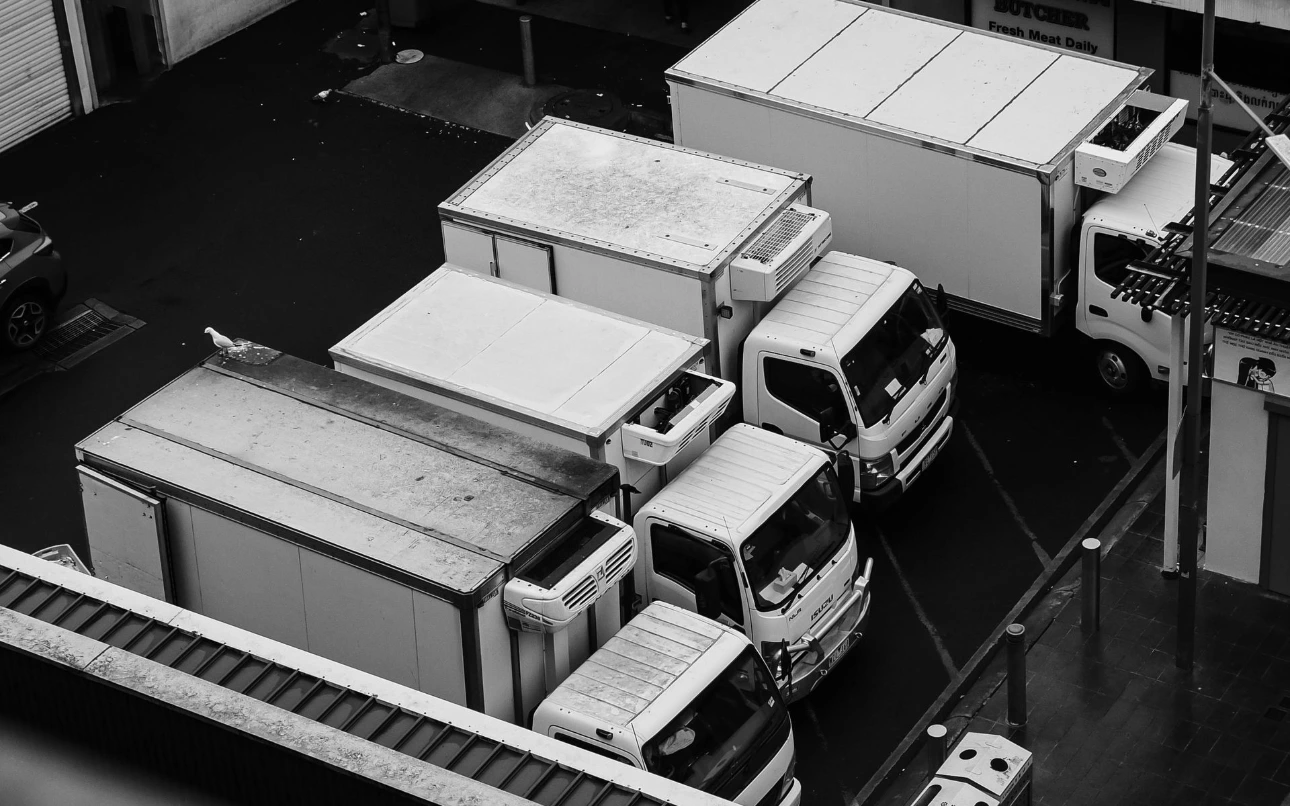
- chilled and frozen product delivery
- van-based direct store delivery
- promotional stock drops
- high-frequency urban delivery schedules
For FMCG operators in Lebanon, where road congestion and stop density can be major planning challenges, route optimization can improve service without necessarily adding fleet size.
Temperature monitoring for chilled and frozen products
For many FMCG businesses, product condition matters just as much as delivery timing.
Maliatrack has multiple case studies showing how telematics supports cold-chain temperature monitoring and automated alerts in delivery fleets. In the UAE, a MaliaTec-implemented Maliatrack solution for Transcorp combined route optimization, maintenance management, driver behavior tracking, and temperature/humidity monitoring for temperature-controlled last-mile deliveries serving clients such as Amazon and Carrefour. The project handled 15,000 deliveries per day with 252 vehicles and achieved an average 98.2% success ratio for guaranteed next-day deliveries, along with 6.2% fewer kilometers traveled and 4% shorter delivery time.
Maliatrack also documents a cold-chain control project for an animal-products manufacturer in Bolivia, where the client needed fully automated temperature monitoring to replace manual compliance verification and gain a full overview of cold-chain planning.
For FMCG companies in Lebanon distributing:
- dairy
- ice cream
- frozen products
- chilled beverages
- fresh foods
- meat products
- temperature-sensitive retail goods
MaliaTrack can help with:
- live temperature monitoring
- humidity monitoring where needed
- threshold alerts
- exception reporting
- route and stop correlation with temperature events
- stronger compliance records
- faster intervention before product loss escalates
This turns cold-chain management into something measurable rather than manual.
Better proof of
delivery and service transparency
FMCG distribution often involves many daily stops, repeated routes, and service-level pressure from retail customers. When something is disputed, the business needs facts.
MaliaTrack helps create a stronger operational record through:
- route history
- geofenced customer-site visits
- arrival and departure times
- stop durations
- exception visibility
- dispatch-level monitoring of completion status
Maliatrack’s FMCG and logistics ecosystem includes analytics solutions designed to estimate service level at delivery points and calculate actual shipping costs per delivery point and product group. That is especially relevant for distributors who need to compare route execution and customer service performance at a granular level.
For FMCG operators, better delivery visibility means:
- fewer disputes
- stronger retailer communication
- better route auditing
- improved SLA management
- more accurate review of underperforming territories or customers

Fuel control and
waste reduction
Fuel is a major cost center in FMCG distribution, especially for fleets with many short-haul urban stops, repeated van routes, and mixed traffic conditions.
Maliatrack’s delivery and cold-chain use cases repeatedly link route optimization, fuel monitoring, idling control, and driver behavior to overall operational savings. In the Transcorp project, the reduction in kilometers traveled directly reduced associated fuel expense. In the Mexican dairy case, the use of idling detection and fuel level sensors contributed to a reported 40% reduction in fuel consumption.
MaliaTrack can support fuel control through:
- idling reports
- trip and distance analysis
- driver-by-driver comparison
- route efficiency measurement
- suspicious fuel event detection where sensors are used
- fuel level monitoring
- stop-pattern analysis
- consumption benchmarking by vehicle or route
For FMCG fleets, the biggest fuel improvements often come from fixing the basics:
- better route planning
- less idling
- fewer unauthorized trips
- better driving habits
- stronger maintenance discipline
- better stop sequencing
Telematics makes those issues visible and measurable.
Driver behavior
monitoring for safer and more efficient deliveries
Driver performance affects more than accident risk. In FMCG, it also affects delivery consistency, fuel cost, asset wear, and customer satisfaction.
MaliaTrack can help monitor:
- speeding
- harsh braking
- harsh acceleration
- aggressive cornering
- excessive idling
- out-of-hours use
- route deviation
- driver identification
- driver score trends
Maliatrack’s documented solutions for delivery fleets and cold-chain operations include driver behavior monitoring as part of broader operational optimization. In the Transcorp project, video telematics and eco-driving tools were used to track and improve driver behavior, while the company reported zero road accidents during the five months after implementation. In the Mexican dairy project, the client used the data to identify careless driving and improve driver performance.
For FMCG businesses, this matters because safer and more disciplined driving usually leads to:
- lower fuel consumption
- fewer vehicle issues
- more predictable delivery timing
- less product damage in transit
- fewer customer complaints
Maintenance planning
to protect delivery uptime
Delivery failures often begin in the workshop, not on the road.
If maintenance is poorly timed, delivery vehicles are more likely to break down during critical routes, miss windows, or create service disruptions that are expensive to recover from. Maliatrack’s MaliaTec-led Transcorp project explicitly included maintenance management as part of the optimization solution, showing that uptime planning is a real part of advanced delivery operations.
With MaliaTrack, FMCG fleets can manage service planning based on:
- mileage
- engine hours
- time intervals
- usage intensity
- workshop history
- preventive service reminders
This helps improve:
- vehicle availability
- route continuity
- fleet reliability
- maintenance timing
- cost planning
- driver confidence in the assigned vehicle
For high-frequency delivery fleets, preventive maintenance is a commercial necessity, not just a technical process.
Stronger control over
perishable-product transport
Some FMCG categories require more than standard delivery tracking. Dairy, fresh foods, chilled beverages, and similar categories may need sensor-based visibility into the product environment and loading process.
A strong Maliatrack example comes from Grupo Alpura in Mexico. The project combined IoT fleet management with dairy-specific monitoring needs, including cold-chain temperature monitoring, milk density tracking, volume measurement, fuel tracking, and customized dashboards. The client gained real-time visibility into transported milk quality and reported fuel reduction, theft prevention, better driver behavior, and faster deliveries through route optimization.
This matters for the MaliaTrack FMCG page because it shows that Maliatrack can support not only basic distribution but also more complex operational environments where product condition and delivery compliance both matter.
Distribution
analytics and service-level improvement
FMCG businesses need to understand not just where the vehicles went, but how the network is performing.
Maliatrack’s marketplace includes an analytics integration built specifically for FMCG distributors and manufacturers, helping calculate shipping cost by delivery point, product group, and individual delivery, while also estimating service level at delivery points.
That kind of visibility is useful for decisions such as:
- which routes are too expensive
- which customers are difficult to serve profitably
- where delivery time is being lost
- which territories need redesign
- which product categories create disproportionate cost
- whether the fleet is actually improving service levels over time
For a growing FMCG operator, that is where telematics becomes a strategic tool rather than only a dispatch tool.